

Introduction
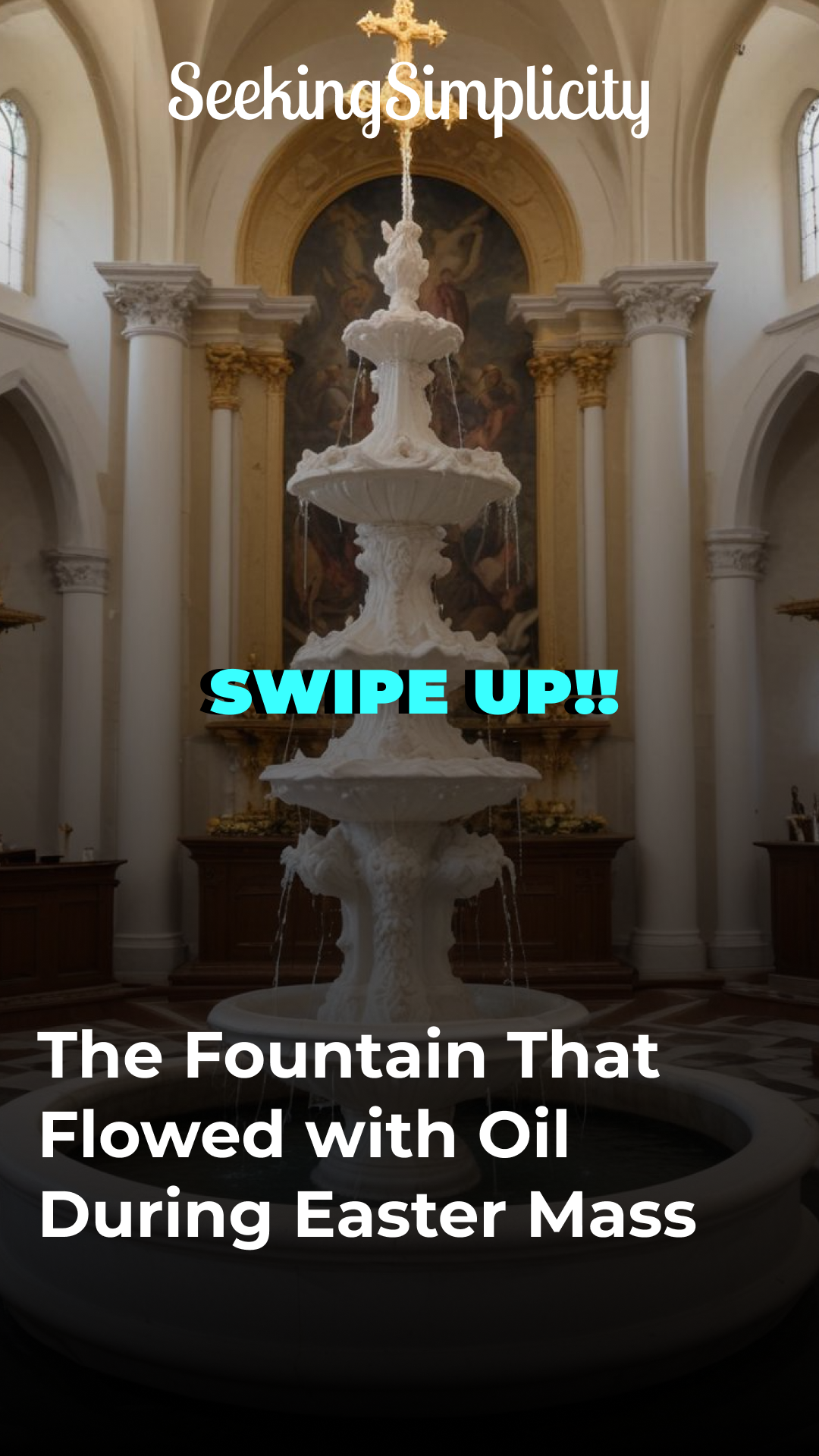
In April 2025, during the Orthodox Easter celebrations in Thessaloniki, Greece, worshippers at a centuries-old church reported witnessing something extraordinary: a stone fountain in the church courtyard, long dry and purely decorative, suddenly began to flow—not with water, but with a fragrant, oil-like substance.
The event, which occurred during the midnight Easter Mass, has divided opinion. Believers see it as a clear sign of divine blessing, while skeptics search for natural or fraudulent explanations. Yet for the thousands present that night, the fountain has become a living icon of resurrection hope.
The Event
The Church of St. Demetrios was overflowing with worshippers when the midnight bells announced Christos Anesti—Christ is Risen. As the crowd poured into the courtyard holding candles, attention shifted to the old stone fountain at the center.
“It began as a trickle,” said witness Anastasia. “Then, before our eyes, golden liquid bubbled over the edge. It smelled like olive oil mixed with myrrh.”
Within minutes, pilgrims were dipping cloths and bottles, convinced they were receiving a sacred gift.
Eyewitness Testimonies
“I touched it and felt warmth in my hands, as if it carried life,” said Nikos, a young father. “My daughter, sick for weeks, breathed easier after I blessed her with it.”
Another woman, Eleni, testified: “I saw people crying, kneeling, singing hymns. It was as if heaven itself celebrated Easter with us.”
Videos show crowds pressing forward, priests trying to maintain order as the fountain continued to flow.
The Substance
Samples collected were analyzed by local chemists. Results showed a mixture of olive oil with traces of aromatic resins. Yet no mechanism was found in the fountain’s structure—it had been dry for decades, sealed off from plumbing.
“From an engineering perspective, there is no explanation,” admitted Professor Georgiadis, who inspected it. “No pipes, no hidden pumps. Yet it flowed abundantly for hours.”
Religious Interpretation
The local Metropolitan declared the event a “sign of the Resurrection’s power.” “Oil in Scripture symbolizes healing, anointing, and the Holy Spirit,” he said. “That it flowed on Easter night is no coincidence.”
Some compared it to biblical accounts of oil multiplying in jars or lamps burning without ceasing. “God still gives us tangible reminders,” noted one monk from Mount Athos.
Skeptical Views
Skeptics suggested foul play. Some accused the church of staging the event to attract pilgrims. “Perhaps oil was hidden in the stone and released at midnight,” argued a critic.
Others insisted it was group hysteria: “People were primed for miracle; they saw what they wanted to see.”
Yet critics struggled to explain the chemical tests or the sheer volume of liquid—reportedly liters flowing well into the night.
Pilgrimage Movement
Word spread quickly. Within days, thousands flocked to Thessaloniki, bringing bottles and containers to collect what they now called “Easter oil.” Pilgrims reported healings—joint pains eased, anxiety lifted, relationships reconciled.
Local hotels filled with visitors. Vendors sold candles and icons, while priests worked tirelessly to minister to the swelling crowds.
Historical Echoes
Christian history includes many accounts of miraculous oil—icons weeping myrrh, relics exuding fragrance, lamps never running dry. The Thessaloniki fountain joins this tradition, but with a unique communal element: it occurred not in secrecy, but before thousands on Easter night.
“It is one thing to hear of oil from relics,” said historian Dr. Kalopoulos. “It is another to see a dry fountain burst forth in front of an entire city.”
Global Reaction
The story spread internationally. Christian networks hailed it as Easter’s greatest testimony of the year. Secular outlets ran cautious headlines: ‘Fountain Flows with Oil in Thessaloniki—Miracle or Mystery?’
On social media, the hashtag #EasterOil trended, with photos of pilgrims holding jars of the golden liquid. Believers shared prayers, skeptics joked about “olive oil discounts from heaven.”
Theological Reflections
Theologians reflected on deeper meaning. “Oil represents the Spirit poured out on the Church,” said Father Ioannis. “Perhaps God wished to remind us that resurrection is not only history but reality today.”
Others warned: “We must not reduce Easter to spectacle. The true miracle remains Christ’s victory over death. The oil is a sign pointing back to that truth.”
Symbolism
For worshippers, the symbolism was clear: Easter brings life from what was dry and dead. “The fountain was like our hearts,” said one pilgrim. “Empty for so long, then overflowing when touched by Christ’s resurrection.”
Continuing Effects
Weeks later, the fountain remained dry again. Engineers continued to study it, but no further flows occurred. Yet the impact endures. Pilgrims carry bottles of oil home, treating it as holy. Churches across Greece report increased attendance. Families gather nightly to pray, inspired by the story.
Even skeptics admit the event revived community spirit. “Whether miracle or mystery, it gave people hope,” wrote columnist Sofia Markou.
Conclusion
Did the fountain of Thessaloniki truly flow with divine oil, or was it an unexplained natural oddity? For the thousands who stood under candlelight and watched golden liquid spill from ancient stone, the answer is already clear.
Perhaps the greater miracle is not the oil itself, but what it sparked: renewed faith, unity, and joy on the night when Christians proclaim that death has been conquered.
As one pilgrim whispered while dipping her cloth: “The stone was empty, and life poured out. Isn’t that Easter itself?”
