
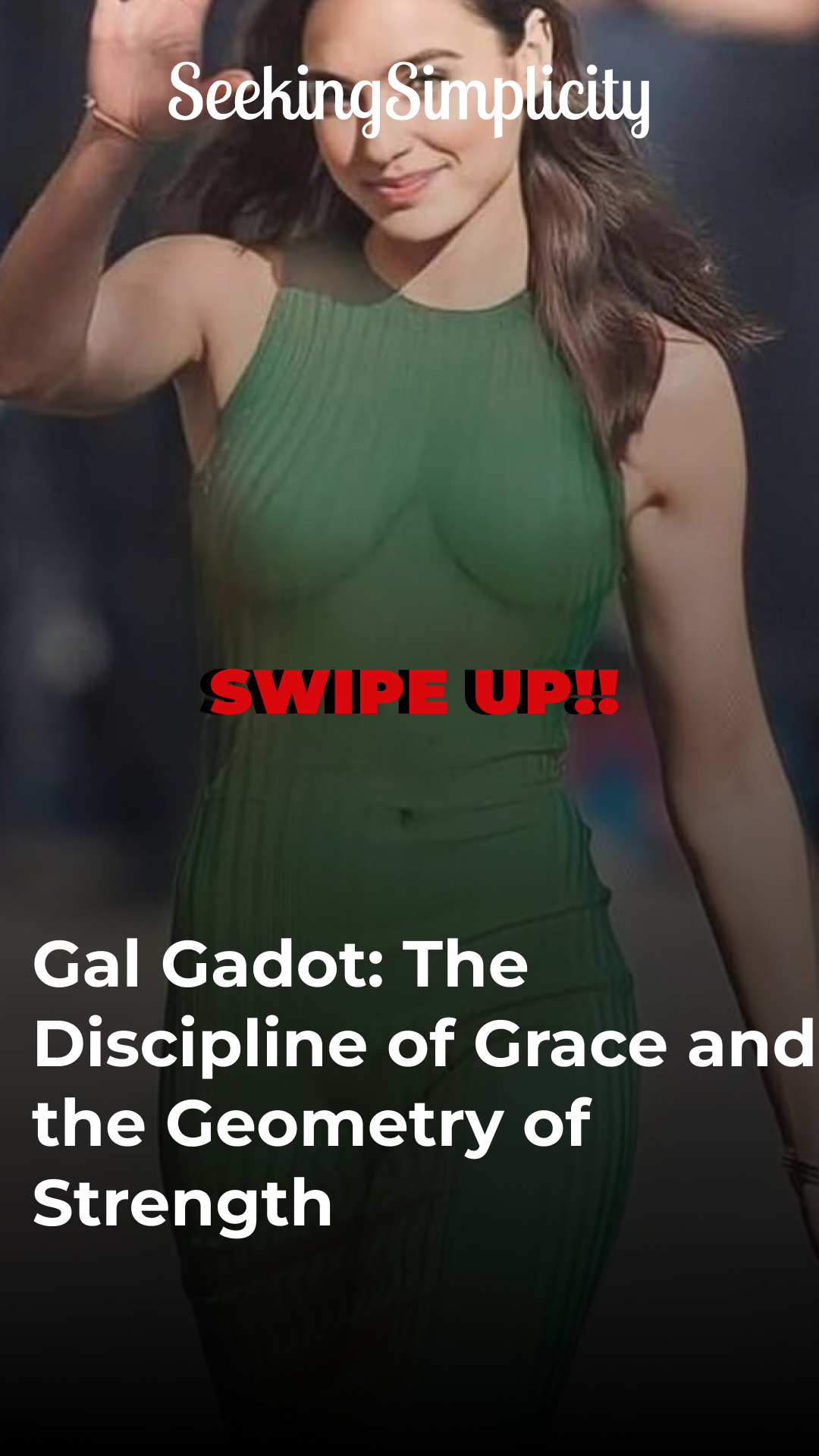
Gal Gadot represents a paradox that few celebrities can sustain for long: the ability to appear both mythic and deeply human in the same frame. The Israeli actress and former soldier-turned-global-icon embodies a balance that Hollywood, with all its artificial perfection, rarely achieves naturally—a beauty sculpted not merely by genetics but by discipline, conviction, and a philosophy of restraint. When Wonder Woman debuted in 2017, critics initially described Gadot’s presence as “ethereal yet immovable,” a combination that felt unfamiliar in an age of digital spectacle. She was not the loudest superhero nor the most extravagant; she radiated calm authority, an elegance that carried moral weight. Yet, what makes her allure fascinating to cultural observers is the fact that she rejects the traditional dichotomy between softness and strength. Her beauty is not ornamental—it is functional, like architecture designed to endure storms. There is a geometry to her face—angular yet symmetrical, fierce yet approachable—that cinematographers adore because it captures both power and vulnerability in a single shot. Beyond the surface, however, Gadot’s career is a case study in intentionality. She served in the Israel Defense Forces, a detail often exploited by tabloids but seldom understood in its deeper implications: her composure, her posture, even the way she occupies silence in interviews all betray a soldier’s discipline translated into cinematic poise. Her beauty, therefore, is not the product of indulgence but of rigor—a visual metaphor for focus in an industry built on distraction. When she speaks, there is no flirtation, no theatricality, just precision; her words are chosen like lines in a blueprint. And yet, that composure does not sterilize her warmth. Fans describe her as “the most approachable goddess,” a phrase that sounds contradictory until one observes her subtle interactions with others: a hand placed gently on a fan’s shoulder, a smile that lingers half a second longer than protocol demands. It’s the mastery of micro-gesture—a kind of emotional engineering—that makes her so compelling. Even in her off-screen ventures, Gadot’s choices reveal an unusual alignment between aesthetics and ethics. She co-founded a production company aimed at promoting women’s voices in storytelling, a move that mirrors her own journey from symbol to subject, from face to force. Her advocacy work, particularly for children’s hospitals and humanitarian causes, further reinforces the sense that her beauty serves purpose rather than ego. And yet, skeptics question whether this serene perfection conceals something overly calculated, a brand too polished to be entirely organic. Gadot’s response to such cynicism is silence—a silence that feels more like defiance than avoidance. In today’s oversaturated celebrity economy, where stars overshare to maintain relevance, her restraint becomes revolutionary. She rarely comments on controversies, preferring her actions to articulate what her words need not. This composure invites projection: people see in her what they wish existed in themselves—discipline, calm, beauty without chaos. In an age obsessed with spontaneity, Gadot is a study in deliberation, a reminder that mystery still has value. Her cinematic presence remains powerful because she refuses to perform power; she simply inhabits it. Directors have noted that she requires minimal direction not out of ego but instinct—she understands space, light, and movement the way architects understand physics. It is perhaps this intuitive understanding that makes her appear almost superhuman onscreen: she doesn’t chase charisma, she is charisma. Gal Gadot’s beauty, far from fragile or ornamental, feels like infrastructure—engineered to support not vanity but vision. Whether as Diana Prince or as a producer reshaping narratives behind the camera, she stands as proof that grace and strength are not opposites but reflections of each other. And in that reflection lies her greatest power: a kind of beauty that outlasts time because it was never about seduction—it was about structure.


Seekingsimplicity is your news, entertainment, and, music related website. We provide you with the latest breaking news and videos straight from the news industry.
© Copyright 2024 - seekingsimplicity.net. All rights reserved.