

A Night of Fear
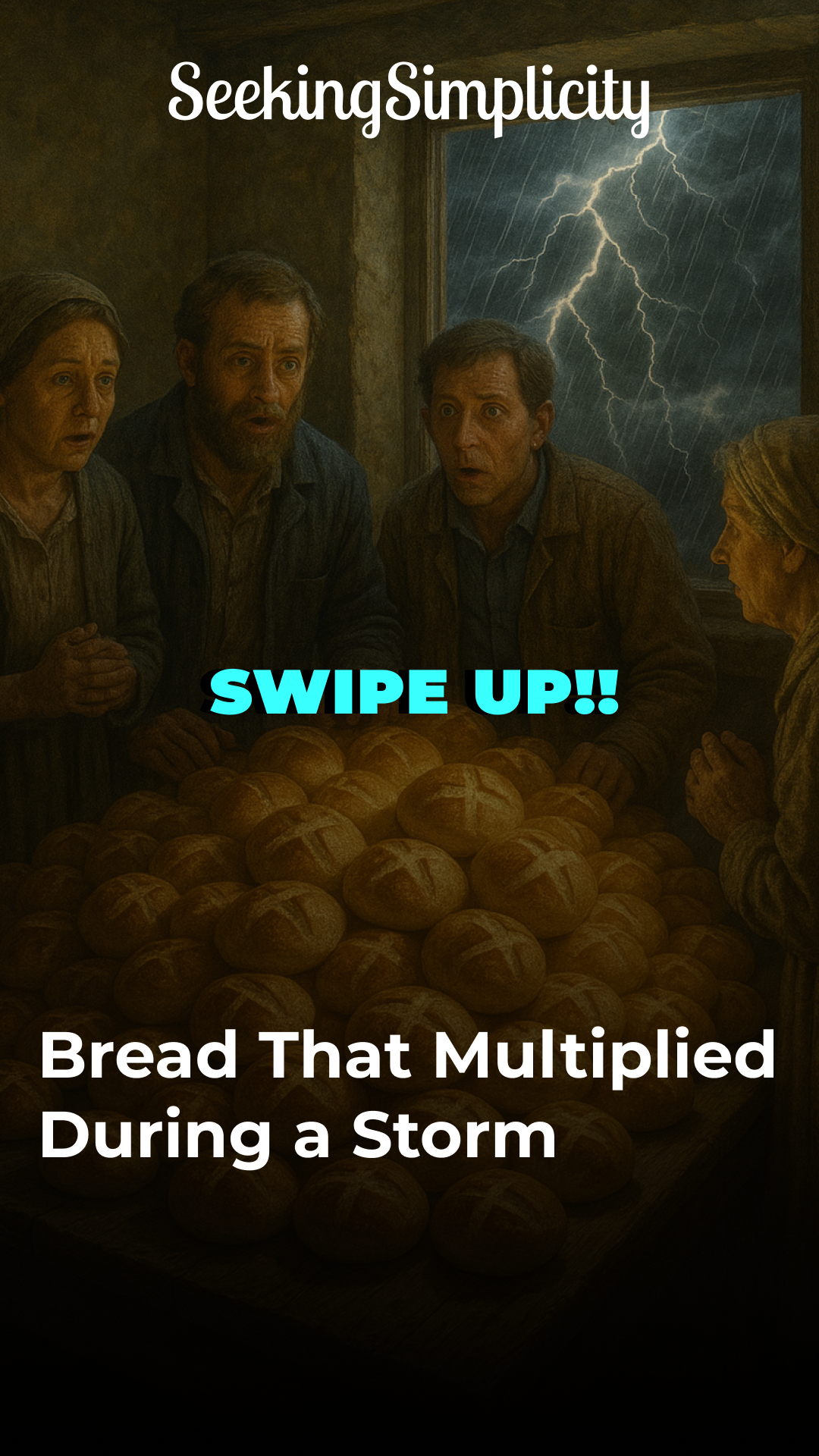
The storm came without warning. Thunder cracked across the valley, and rain fell in sheets so heavy it blurred the horizon. Crops were flattened, roads turned to rivers, and families huddled together in darkness. The village, already poor, feared that this storm would rob them of their remaining grain stores.
In the midst of chaos, a small church stood on a hill. Its roof leaked, its windows rattled, but its doors remained open. Dozens of villagers fled there, seeking shelter. They brought children, blankets, and little else. By midnight, over sixty people crowded inside, hungry, soaked, and afraid.
The Problem of Hunger
As the wind howled, the villagers realized they had brought no food. Only a few loaves of bread, wrapped hastily by families, were set upon the altar. It was not enough for so many. Mothers worried for their children, the elderly whispered prayers, and despair threatened to settle heavier than the storm.
Father Luka, the parish priest, stepped forward. “We cannot let fear starve us,” he said. “We will bless what we have, and God will provide.”
Some scoffed quietly. How could five loaves feed sixty? Yet others remembered the story of Christ feeding the five thousand. Perhaps, they thought, if ever there was a time to trust, it was now.
The Blessing of the Bread
Father Luka lifted the loaves. His voice trembled, not with fear, but with conviction:
“Lord, You multiplied bread once by the sea of Galilee. If it is Your will, multiply it again here, for Your children are hungry.”
He broke the first loaf into pieces, placing them in a basket. A woman carried the basket through the crowd, handing out fragments. Each person received a portion, yet the basket never emptied. She returned it to the altar, still heavy.
Another villager carried the second basket, the same miracle unfolding. By the time the fifth loaf was broken, every person had bread in hand—warm, fresh, more than enough.
The Witnesses’ Shock
Gasps filled the church. Some wept openly. Children laughed, clutching pieces larger than their hands. One elderly man declared, “I saw it with my own eyes—the bread grew as it was given. God is with us tonight.”
Others remained silent, unable to explain but unwilling to deny. Skeptics later insisted that the loaves must have been larger than remembered, or that villagers shared secretly. Yet those present swore that was not so. They had seen what they had seen.
The Storm Outside
As the bread was distributed, the storm intensified. Lightning struck a nearby tree, flames erupting before the rain extinguished them. Yet inside the church, peace reigned. The people sang hymns, their voices rising above the thunder. The bread, though ordinary in taste, felt extraordinary in meaning.
One child whispered to his mother, “It’s like Jesus is here.” She hugged him close, unable to reply through her tears.
The Aftermath
By dawn, the storm subsided. The village was battered, fields flooded, homes damaged. Yet hunger did not claim them. Each family left the church with more bread than they had entered with. For days afterward, the loaves remained fresh, as though untouched by time.
Farmers rebuilding their barns spoke of the bread with awe. “We should have starved,” one said, “but instead we were fed. Not just our bodies, but our faith.”
The Division of Opinion
News spread quickly. Some hailed it a miracle, comparing it to the Gospel accounts. Others argued it was coincidence, or collective exaggeration. Rational explanations were offered: hidden supplies, miscounted loaves, emotional memory. But none explained why every witness swore the same story—that bread did not run out until every stomach was full.
Father Luka refused to argue. “Believe what you wish,” he told journalists. “But ask the people: were they fed? Did their hope return? That is the miracle.”
Transformation of the Village
The storm had damaged much, but it had also planted something new. The villagers, once divided by old grudges, worked together to repair homes and fields. Families shared food more freely. The church, often half-empty before, now overflowed each Sunday.
For the children who grew up with the memory, the event became a cornerstone of their faith. Decades later, they would tell their grandchildren, “I was there, when bread multiplied in a storm.”
A Modern-Day Loaves and Fishes
Theologians who studied the account argued that whether natural or supernatural, the event carried unmistakable symbolism. “It is not about bread,” one wrote, “but about trust. In the storm, they trusted God—and trust was multiplied, just as bread was.”
Indeed, the people themselves agreed. When asked years later what they remembered most, few mentioned the taste of bread. Instead, they spoke of the peace that fell upon them, the sense of being cared for, the unity that followed.
Closing Reflection
Bread is the simplest of foods, yet in the right hands it becomes sacred. On that stormy night, it was not merely flour and yeast that sustained a village—it was faith, breaking fear like loaves broken upon the altar.
The villagers still tell the story, not to prove a miracle, but to remember: storms will come, hunger will threaten, despair will whisper—but when people gather in faith, there is always enough.
And so, the bread that multiplied during the storm continues to feed, not mouths, but souls.
