

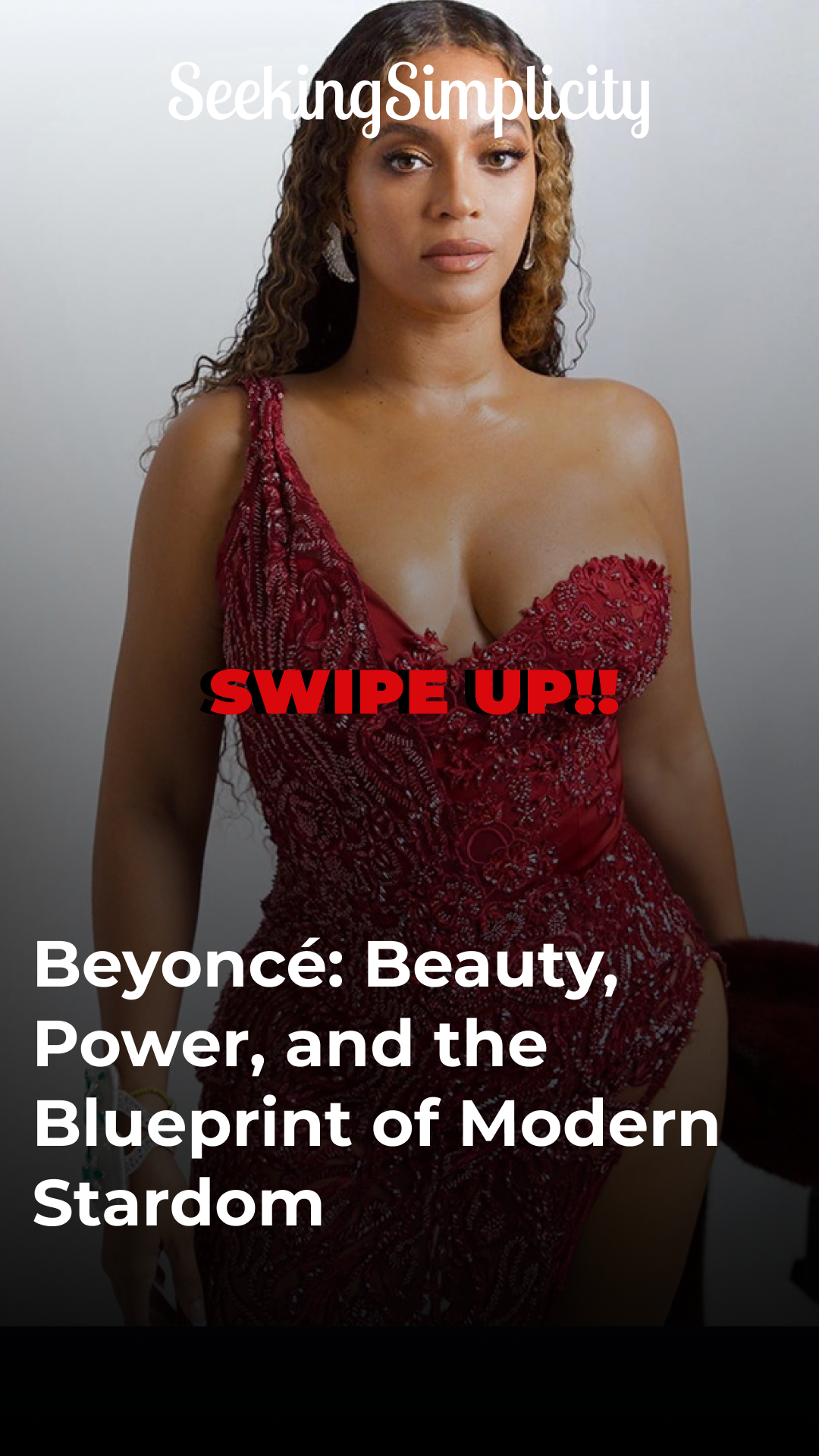
Beyoncé Knowles-Carter is more than a celebrity—she is an institution. For over two decades, she has redefined what it means to be beautiful, talented, and powerful in a culture that is constantly shifting. She is not simply a singer or performer, but a cultural architect whose influence spans music, fashion, politics, and identity. To understand Beyoncé is to understand how beauty can be transformed into agency, and how talent, when paired with discipline and vision, can reshape an era.
Early Beginnings in Houston
Born in Houston, Texas, in 1981, Beyoncé Giselle Knowles grew up in a family that nurtured her artistic inclinations. Under the guidance of her parents, she trained rigorously in singing and dance, developing a stage presence that belied her age. By the late 1990s, she had risen to prominence as the lead singer of Destiny’s Child, one of the best-selling girl groups of all time.
With hits like Say My Name and Survivor, Beyoncé’s voice and charisma stood out. Even then, her beauty was striking—not just in her looks but in the confidence with which she carried herself. She projected strength, determination, and aspiration, offering a new image of Black femininity in mainstream pop.
Solo Stardom
In 2003, Beyoncé launched her solo career with Dangerously in Love, an album that won five Grammy Awards and announced her as a solo force. From that moment forward, she built one of the most successful careers in music history.
Albums like B’Day (2006), I Am… Sasha Fierce (2008), 4 (2011), and Beyoncé (2013) showcased her ability to evolve with each project. She was not merely chasing trends—she was setting them. Her beauty was often at the center of her artistry, but always framed within narratives of empowerment, independence, and identity.
Her 2016 visual album Lemonade elevated her from global star to cultural icon. The album wove together personal vulnerability, African American history, and feminist themes. It was a meditation on pain, resilience, and love, presented through stunning visuals. Here, Beyoncé’s beauty was not ornamental—it was political, historical, and deeply personal.
Redefining Beauty Standards
Beyoncé has played a central role in reshaping global beauty standards. She embodies a kind of beauty that resists narrow definitions. Her curves, skin tone, and hairstyles have become symbols of pride for communities long excluded from mainstream ideals.
She has consistently celebrated Black aesthetics—from braids to natural textures, from African-inspired costumes to unapologetic celebration of her body. In doing so, she has expanded what beauty means, making space for millions who once felt invisible.
Her influence is not superficial. By placing Black beauty at the center of global pop culture, Beyoncé has challenged centuries of Eurocentric dominance. She reminds the world that beauty is not monolithic but diverse, complex, and powerful.
The Business of Beyoncé
Beyond artistry, Beyoncé is a shrewd entrepreneur. She co-founded Parkwood Entertainment, which produces her music, films, and tours. She has built fashion lines, fragrance empires, and global partnerships. Her Ivy Park brand with Adidas blends athletic wear with high fashion, embodying her ability to straddle multiple markets.
Her financial success underscores a crucial point: Beyoncé is not merely a performer but a CEO of her own empire. She has taken control of her image, brand, and business in ways few artists manage, ensuring her beauty and talent translate into lasting power.
Performances as Cultural Events
No discussion of Beyoncé is complete without acknowledging her performances. From the 2013 Super Bowl halftime show to Homecoming at Coachella in 2018, she has turned concerts into cultural history.
At Coachella, she became the first Black woman to headline the festival, and her performance paid homage to Historically Black Colleges and Universities (HBCUs). The show, later released as a Netflix documentary, was not just entertainment—it was cultural education.
Her beauty in these performances is inseparable from her artistry. Every costume, gesture, and expression is deliberate, designed to amplify themes of empowerment, heritage, and excellence.
Private Life, Public Symbol
Beyoncé’s marriage to rapper Jay-Z has been both deeply private and publicly scrutinized. Together, they have built a family and a business empire, while navigating challenges under the relentless gaze of fame.
What distinguishes Beyoncé is her ability to control the narrative. She rarely gives interviews, choosing instead to speak through her art. Lemonade was both a personal confession and a cultural manifesto, using beauty and artistry to address themes of betrayal, healing, and forgiveness.
This selective privacy enhances her mystique. She is everywhere, yet elusive—both accessible through her music and untouchable in her personal life.
Activism and Advocacy
Beyoncé has used her platform to amplify social causes. She has spoken out on feminism, police brutality, racial inequality, and disaster relief. Her songs Formation and Black Parade are unapologetic celebrations of Black pride and resistance.
Her activism is woven into her beauty. By centering African-inspired aesthetics in her videos and performances, she asserts cultural pride as a form of political resistance. She demonstrates that beauty is not apolitical—it can be a form of protest.
Why Beyoncé Endures
Beyoncé endures because she constantly evolves. She is not just a singer, actress, or dancer—she is a cultural phenomenon who uses beauty as a tool of storytelling. Her artistry is inseparable from her activism; her performances are inseparable from her politics.
She represents excellence not as perfection but as relentless pursuit of growth. Her beauty is timeless because it is never static. It adapts, evolves, and redefines itself in tandem with her artistry and identity.
Conclusion
Beyoncé is far more than a beautiful celebrity woman. She is an architect of culture, a business mogul, and a voice of empowerment. Her beauty is not ornamental—it is a living language of resilience, power, and pride.
From Houston to the global stage, from Destiny’s Child to Renaissance, she has consistently proven that beauty and artistry can change the world. She is not simply admired—she is studied, emulated, and revered.
In Beyoncé, we see the blueprint of modern stardom: beauty rooted in strength, artistry rooted in truth, and influence rooted in purpose.
