

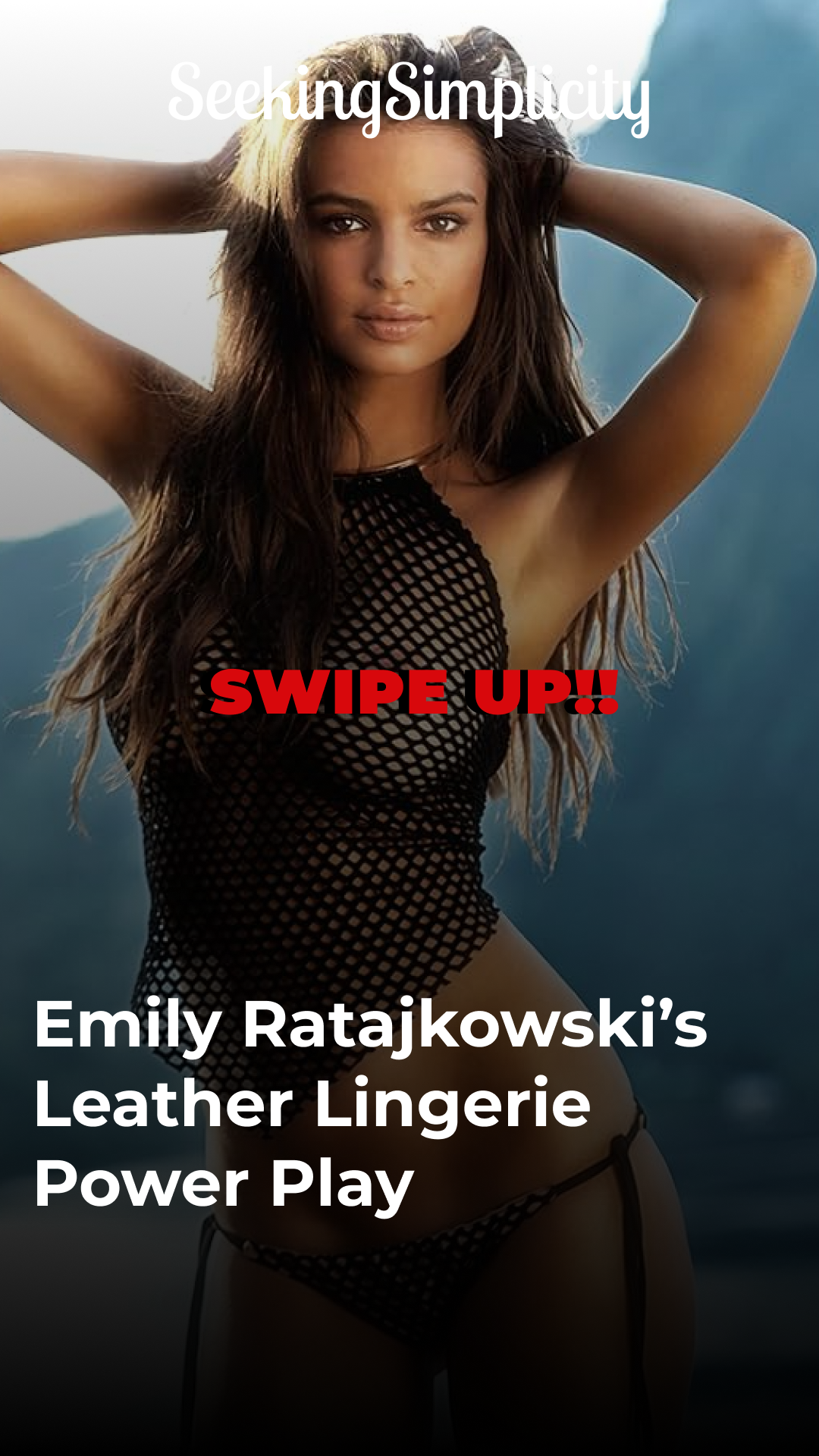
When Emily Ratajkowski stepped into the spotlight at New York Fashion Week in a barely-there leather lingerie ensemble, the air in the room seemed to shift. She wasn’t simply dressed—she was armed. Corseted in glossy black leather that wrapped around her body like a second skin, the model-turned-entrepreneur turned a runway into a declaration of war on restraint, subtlety, and the outdated notion of “appropriate” femininity.
The look was deliberately confrontational. Straps cut across her shoulders with the severity of dominatrix chic, while the plunging neckline left nothing to the imagination. The leather bra—half couture, half bondage—shimmered under the runway lights, daring every pair of eyes in the room to follow every curve. Matching garters and thigh-high boots sealed the aesthetic: Ratajkowski wasn’t here to flirt. She was here to dominate.
Critics gasped, fashion journalists scribbled frantically, and Twitter erupted with polarized takes within seconds of the first photos hitting the feed. Admirers hailed her as the embodiment of unapologetic sensuality, the “queen of empowerment dressing.” Detractors derided the look as pure shock value, “lingerie cosplay parading as high fashion.” But even those who hated it couldn’t deny the spectacle—Emily’s look had seized the cultural conversation.
Ratajkowski herself leaned into the chaos. “Fashion should be fearless,” she told reporters backstage, smirking as cameras scrambled to catch every angle of her leather-clad figure. “If a woman in lingerie terrifies you, maybe it’s time to ask why.” The quote became a viral refrain, shared in feminist think-pieces, TikTok edits, and late-night talk show punchlines alike.
The ensemble itself was no off-the-rack fantasy. Designed by a collaboration between Mugler and an avant-garde fetishwear label, it required custom fittings to mold to her body with sculptural precision. Industry insiders whispered that the set blurred boundaries between couture and kink, opening a new conversation about how far luxury fashion can push into taboo.
Online, the reactions bordered on hysteria. Some fans praised the look as the “apex of lingerie-as-armor,” while others argued it was “too much even for Ratajkowski.” Memes sprouted overnight: side-by-side comparisons to comic book dominatrixes, leather-clad superheroes, even medieval knights. Whether she was a goddess, a villain, or a warrior depended entirely on the viewer’s gaze.
But beneath the theatrics, Ratajkowski’s choice carried weight. For years, she has spoken openly about the paradox of female beauty—how women are celebrated, punished, consumed, and criticized in equal measure for their bodies. By stepping onto the runway in leather lingerie, she forced the fashion world to confront its own contradictions. Was she exploiting herself, or exposing the hypocrisy of those who consume her image? Was she pandering to fantasy, or reclaiming it?
The following day, the look dominated headlines. Fashion magazines debated whether this was the beginning of a “fetish couture” wave, while gossip columns speculated if Ratajkowski had gone “too far” in chasing provocation. But the real story was simpler: no one could stop talking about her. In an industry fueled by attention, Emily had once again proven she knew how to turn controversy into currency.
The message was clear: lingerie, leather, provocation—these were no longer private indulgences. On Emily Ratajkowski, they became instruments of power. Whether you admired her audacity or recoiled from it, you were forced to acknowledge it. And in the world of celebrity fashion, acknowledgment is the ultimate victory.
