

Manaus, Brazil —
In the heart of the Amazon, where swollen rivers can turn quiet fishing villages into raging torrents overnight, one man’s survival story is being hailed as a modern-day miracle.
For 38-year-old fisherman João Pereira, the evening of the flood began like many others — repairing nets, tending to his small wooden boat, and listening to the distant hum of the jungle. But as night fell, the sky turned a bruised gray, and winds began to howl. Heavy rain soon pounded his village, accompanied by the roar of water rising from the riverbanks.
“It came faster than anyone expected,” João said. “One moment, we were watching the rain from our homes. The next, the water was at our feet.”
Within minutes, the gentle lapping of the river had transformed into a violent current. João rushed to his boat, hoping to secure it, but a sudden wave slammed into the hull, flipping it. He was thrown into the muddy, churning water.
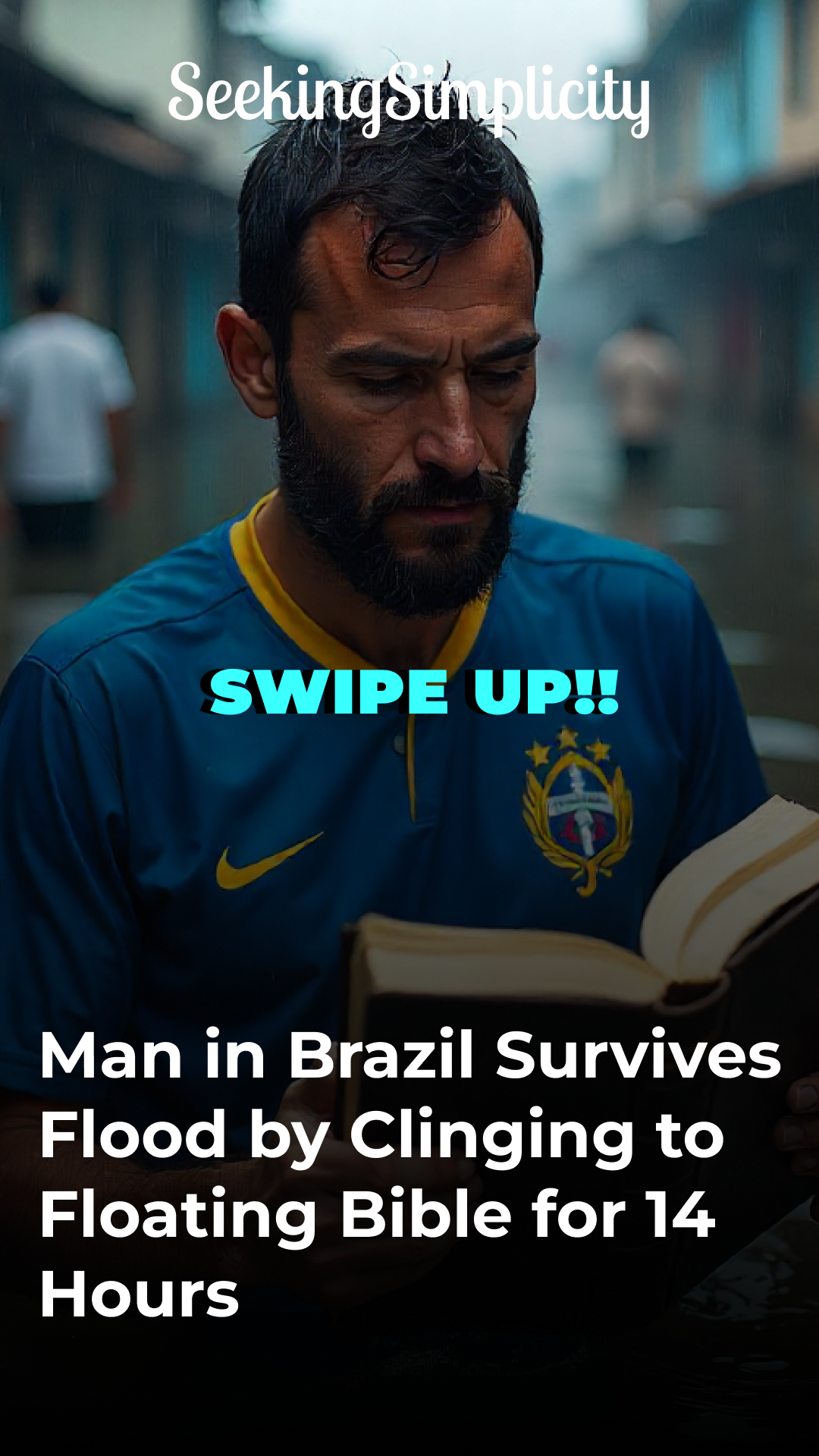
That’s when it happened. “Something hard hit my chest,” he recalled. “When I grabbed it, I saw it was a Bible. I don’t know where it came from — maybe from a church, maybe from someone’s home — but it was there, floating like it was meant for me.”
João clutched the book tightly to his chest as the current swept him away. The rain blurred his vision, and the darkness was near total. The river carried him past uprooted trees, debris from shattered houses, and the cries of distant voices. He could not swim against the flood, so he let it carry him, focusing on keeping his head above water.
“I could not open it in the storm,” he said, “but I prayed over it. I told God, ‘If this is Your Word, let it keep me afloat.’ And it did.”
For fourteen long hours, João drifted, alternating between prayer and moments of numb silence. Several times, he thought he saw lights along the shore, but the current pulled him back into darkness. His arms ached, his lips were cracked from the rain and wind, and his mind wandered between fear and hope.
Just before dawn, the current slowed. João found himself tangled in the branches of a partially submerged tree. There, exhausted and barely conscious, he waited until he heard the sound of an approaching boat.
Local rescue teams, who had been searching the flooded banks since the night before, spotted him clinging to the tree with one arm and the Bible with the other. “When we pulled him into the boat, he wouldn’t let go of the book,” said rescue worker André Silva. “It was like it was part of him.”
When rescuers finally brought him ashore, João collapsed onto the muddy ground, still holding the waterlogged Bible. It was soaked through but intact, its thin pages stuck together yet still legible. A faded red ribbon marked a single passage: Psalm 46 — “God is our refuge and strength, a very present help in trouble.”
Word of João’s survival spread quickly through the flooded villages. Local pastors began inviting him to share his testimony, calling it a “living example of faith in the middle of disaster.” His story soon reached Manaus, where larger congregations asked him to speak.
“It wasn’t just that he survived,” said Pastor Rafael Moura. “It was how he survived — holding onto the Word of God as if it were the only thing keeping him alive. That image will stay with people for a long time.”
Experts have since pointed out that books, especially when waterlogged, can be surprisingly buoyant for a time. But João remains convinced that his survival was not just physics — it was providence. “That Bible found me,” he said simply. “And it kept me alive.”
Back in his village, João has repaired his boat and resumed fishing, though life after the flood is slower, more thoughtful. The Bible — now carefully dried and wrapped in cloth — sits on a small wooden table in his home. He opens it every morning before heading out to the river.
“When I read it now, I feel the weight of the water, the sound of the storm, the fear I felt,” he said. “But I also feel the peace that came over me when I prayed. God was with me, even in the darkest waters.”
